
England only
£36,000 Household income limit (or a qualifying benefit)
Government-funded grant
Warm Homes: Local Grant
Council-delivered home-energy upgrades for qualifying lower-income households in England: insulation, solar panels, batteries and heat pumps.
- Free eligibility check
- Delivered by councils
- No obligation
Prefer to talk? 0121 838 3030
- England only Not Wales, Scotland or Northern Ireland
- Local councils Run it — help depends on council funding
- 31 March 2028 Delivery until — the government says dates can change
- EPC D–G Lower-income households in less efficient homes
Key facts
- Amount
- Average caps of £16,600 per home for energy upgrades and £16,600 for low-carbon heating, across a council project
- Who qualifies
- Lower-income households in England (means-tested benefits, a gross income of £36,000 or less, or an eligible postcode) in homes rated EPC D to G. Owner-occupied or privately rented.
- Where
- England only
- Deadline
- Delivery runs to 31 March 2028. The government says dates may change, and councils can run out of funding sooner.
- How to apply
- Check on GOV.UK. If you appear eligible and your council has funding, the council contacts you to arrange a survey. Check the Warm Homes: Local Grant on GOV.UK (opens in a new tab)
England only
The Warm Homes: Local Grant applies to homes in England. It is not available in Wales, Scotland or Northern Ireland. The Boiler Upgrade Scheme covers England and Wales.
At a glance
What the Warm Homes: Local Grant is
A government-funded grant, delivered by local councils in England.
- For lower-income households in less efficient homes
- Insulation, solar panels, batteries and heat pumps
- Eligibility is confirmed by the council
- Help depends on your council having funding available
What it is, in full Show less
A government-funded grant, delivered by local councils in England, for energy-efficiency upgrades and low carbon heating in lower-income households living in less efficient homes.
Government-funded home-energy improvements — insulation, solar panels, batteries and heat pumps — for qualifying lower-income households in England, delivered through local councils. Eligibility is confirmed by the council, and help depends on your council having funding available.
Who may qualify
Meet any one household route, and the home must meet the property conditions.
Household — any one of these
-

Your postcode
The home is in one of England’s most income-deprived areas, on the government’s postcode list.
-
Means-tested benefits
Someone gets a benefit such as Universal Credit, Pension Credit or Housing Benefit.
-
Household income
Gross household income of £36,000 a year or less, or below an adjusted threshold.
Property — all of these
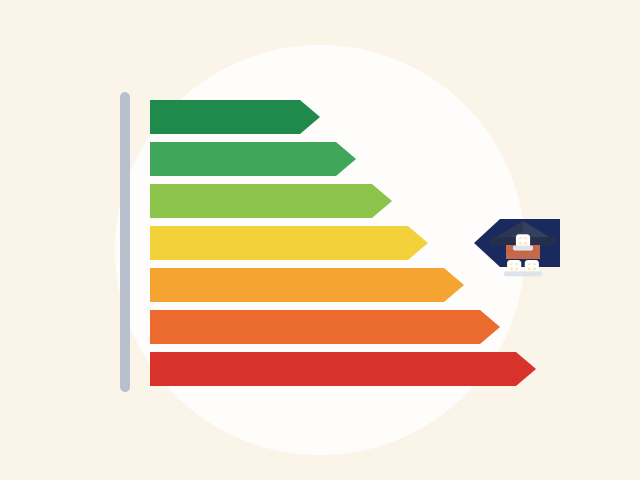
- EPC rating D, E, F or G — not A to C
- An existing home — not a new build or self-build
- Owner-occupied or privately rented; social housing generally not
- On or off the mains gas grid, any current fuel

Tenants and landlords
- Tenants do not pay towards the work
- One property per landlord fully funded; landlord pays 50% after
- No rent rises because of the upgrades
- F- and G-rated rented homes need a registered exemption
Who may qualify, in full Show less
A household usually needs to meet one of the household routes below, and the home also needs to meet the property conditions.
Household — any one of these
1. Your postcode
The home is in one of the most income-deprived areas of England (Income Deciles 1 and 2 of the Index of Multiple Deprivation), on the eligible postcode list published by the government.
2. Means-tested benefits
Someone in the household receives Housing Benefit, income-based Jobseeker’s Allowance, income-related Employment and Support Allowance, Income Support, Pension Credit or Universal Credit.
3. Household income
Gross household income is £36,000 a year or less, or below a threshold that takes housing costs and household make-up into account. Disability benefits such as PIP, DLA and Attendance Allowance are not counted as income.
Property — all of these
- The home has an Energy Performance Certificate (EPC) rating of D, E, F or G. Homes rated A to C are not eligible.
- It is an existing home — new builds and self-builds are not eligible.
- It is owner-occupied or privately rented. Social housing is generally not eligible.
- Homes on and off the mains gas grid can both be eligible, whatever fuel heats them now.
Tenants and landlords
- Tenants do not pay towards the work.
- For privately rented homes, one property per landlord can be fully funded. From a landlord’s second property, the landlord contributes 50% of the cost.
- Landlords must agree not to raise the rent because of the upgrades, and F- and G-rated rented homes need a registered exemption.
About EPC ratings
The EPC requirement is part of this grant’s rules. It is different from the Boiler Upgrade Scheme, where a valid EPC is no longer a standing eligibility requirement. You can look up an existing certificate on the government’s EPC register; if your home has no valid EPC, the council’s survey process will assess it.
What the grant can pay for
Possible measures depend on the survey and on what your council’s project offers.
-

Energy efficiency
Insulation, heating controls, solar panels and batteries, draught-proofing, double or triple glazing and doors.
-

Low carbon heating
Air and ground source heat pumps, high heat retention storage heaters, and hybrids (heat pump part only).
-
Not funded
No new gas boilers or fossil fuel heating. No air-to-air heat pumps or heat batteries until MCS-certified.
Every measure, in full Show less
Energy efficiency
- Loft, cavity wall, solid wall and underfloor insulation
- Heating controls and smart controls
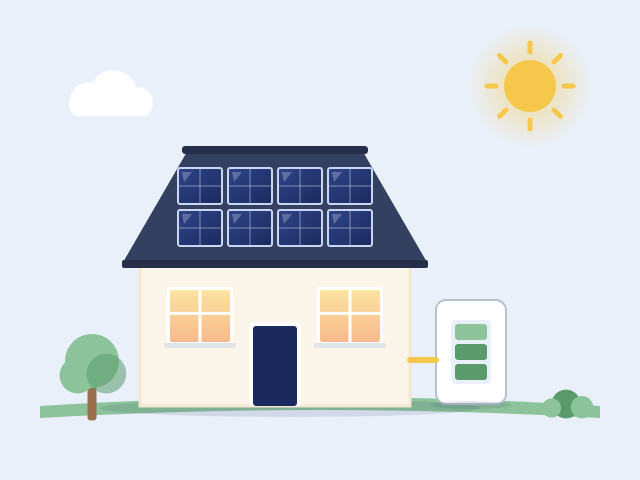
- Solar panels (solar PV) and home batteries
- Draught-proofing, double or triple glazing (windows) and energy-efficient doors
Low carbon heating
- Air source and ground source heat pumps
- High heat retention storage heaters
- Hybrid heat pumps, in homes currently heated by mains gas (the heat pump part only)
Not funded
- New gas boilers, or any other fossil fuel heating.
- Air-to-air heat pumps and heat batteries, until they can be certified under MCS.
How much funding is available?
There is no fixed amount per home.
- Up to £16,600 average per home for energy-efficiency upgrades
- Up to £16,600 average per home for low carbon heating
- Same limits on and off the gas grid
- Owner-occupiers are not asked to contribute
- One of the few routes to grant-funded solar in England
Funding, in full Show less
There is no fixed amount per home. Councils plan their projects around average costs of up to £16,600 per home for energy-efficiency upgrades and up to £16,600 for low carbon heating, and the same limits apply on and off the gas grid. What a particular home receives depends on the survey and the measures it needs. Owner-occupiers are not asked to contribute.
Solar panels and heat pumps can both be part of a package, which makes this one of the few routes to grant-funded solar in England for eligible households. If you are not eligible, see our solar panels and battery storage page for self-funded options, or what solar panel grants are actually available.
Batteries can be included only alongside solar panels; our battery storage guide explains the rules. For insulation on its own, our guide to insulation grants compares this scheme with ECO4 and the schemes in Scotland and Wales.
How applying works
The scheme runs to 31 March 2028, although the government says dates can change. Councils deliver it, so the route in is local.
-
Step 1: Check eligibility on GOV.UK
A free online service asks about your home, household and area.
-
Step 2: Your council gets in touch
Usually within 10 working days, if you appear eligible and funding is available.
-
Step 3: Survey and recommended measures
The survey decides what suits your home. Measures vary by council.
-
Step 4: Installation through the council’s scheme
Through the council’s delivery partners. Owner-occupiers do not contribute.
Funding is not guaranteed. Each council manages a fixed budget.
Each step, and how councils are involved Show less
1. Check eligibility on GOV.UK
The government’s online service asks about your home, your household and where you live. It is free to use.
2. Your council gets in touch
If you appear eligible and your council has funding available, the council will usually contact you within 10 working days to arrange a home survey.
3. Survey and recommended measures
The survey decides which improvements suit the home. Not every measure is offered in every area — councils plan their own projects.
4. Installation through the council’s scheme
The work is arranged through the council’s delivery partners. Owner-occupiers are not asked to contribute.
How councils are involved
Councils — sometimes working in groups — were allocated funding to run their own Warm Homes: Local Grant projects. They check eligibility in detail, arrange the survey and appoint the installers. The government publishes the list of participating councils.
Because each council manages a fixed budget, eligibility alone does not guarantee that funding is available at the time you apply.
How to check your options
Two routes, depending on how sure you are that this grant fits.
Check with the official service
Income or benefits look like a match, and you live in England? The free GOV.UK checker is the direct route in.
Go to the GOV.UK checkerTalk it through with us
Not sure whether this grant, the Boiler Upgrade Scheme or another route suits your home? We can help you understand the options before you decide.
We cannot apply for the Warm Homes: Local Grant on your behalf.
Frequently asked questions
Is the Warm Homes: Local Grant available in Wales?
No. The Warm Homes: Local Grant is only available in England. Wales runs its own separate home-energy programmes.
How do I apply for the Warm Homes: Local Grant?
Start with the government’s online eligibility checker on GOV.UK. If you appear eligible and your local council has funding available, the council will usually contact you within 10 working days to arrange a home survey.
Does the Warm Homes: Local Grant pay for a new gas boiler?
No. New gas boilers and other fossil fuel heating are not funded. Where a hybrid heat pump is installed in a mains gas home, only the heat pump part is funded.
Can tenants get the Warm Homes: Local Grant?
Privately rented homes can be eligible, and tenants do not pay towards the work. The landlord needs to be involved, and from a landlord’s second property onwards the landlord contributes half the cost. Social housing is generally not eligible.
What EPC rating does my home need?
The home needs an EPC rating of D, E, F or G. Homes rated A, B or C are not eligible.
Which postcodes are eligible for the Warm Homes: Local Grant?
Homes in the most income-deprived areas of England, which are Income Deciles 1 and 2 of the Index of Multiple Deprivation, can qualify on postcode alone. The government publishes the list of eligible postcodes alongside the scheme guidance on GOV.UK, and the official eligibility checker asks where you live. The home still needs an EPC rating of D to G, and your council needs to have funding available.
What is the income limit for the Warm Homes: Local Grant?
A gross household income of £36,000 a year or less, or below a threshold that takes housing costs and the make-up of the household into account. Disability benefits such as PIP, DLA and Attendance Allowance are not counted as income. You do not need to meet the income limit if you qualify through a means-tested benefit or an eligible postcode.
Does the Warm Homes: Local Grant cover windows and doors?
Double or triple glazing and energy-efficient doors are among the measures councils can fund, along with draught-proofing. It is not a windows grant you can apply for on its own: the home survey decides what suits the property, and each council chooses which measures its project offers.
Can I get solar panels through the Warm Homes: Local Grant?
Yes, if you are eligible and the survey recommends them. Solar panels can be part of the package of upgrades, and a home battery can be included alongside solar panels. This makes it one of the few routes to grant-funded solar in England.
Can I use the Warm Homes: Local Grant and the Boiler Upgrade Scheme together?
They are separate schemes with separate rules, and grant funding for low carbon heating at an address can affect eligibility for other public funding. If your household does not meet the income or benefits criteria, the Boiler Upgrade Scheme — which has no income test — may be the better route for a heat pump in England and Wales.
Is every measure available in every council area?
No. Each council, or group of councils, plans its own project and decides which measures it offers. The survey decides what suits your home.
Want help working out which scheme fits?
Tell us about your home and we will help you understand the most relevant route — including options if this grant does not apply.
or call 0121 838 3030